What Does Your Home Need? Roof Restoration vs Roof Replacement
Every roof reaches a point where it needs more than a quick patch. When that happens, most homeowners face the same question: is it better to restore what is already there or start again with a new roof? At Quality Roof Reseals, we are asked about roof restoration vs. roof replacement almost every week, and the honest answer is that it depends on the condition of the roof, not on what is cheaper or more convenient for us. This guide explains how each option works, how to tell which one suits your home, and what we look for when we climb onto a roof.
What Roof Restoration Involves
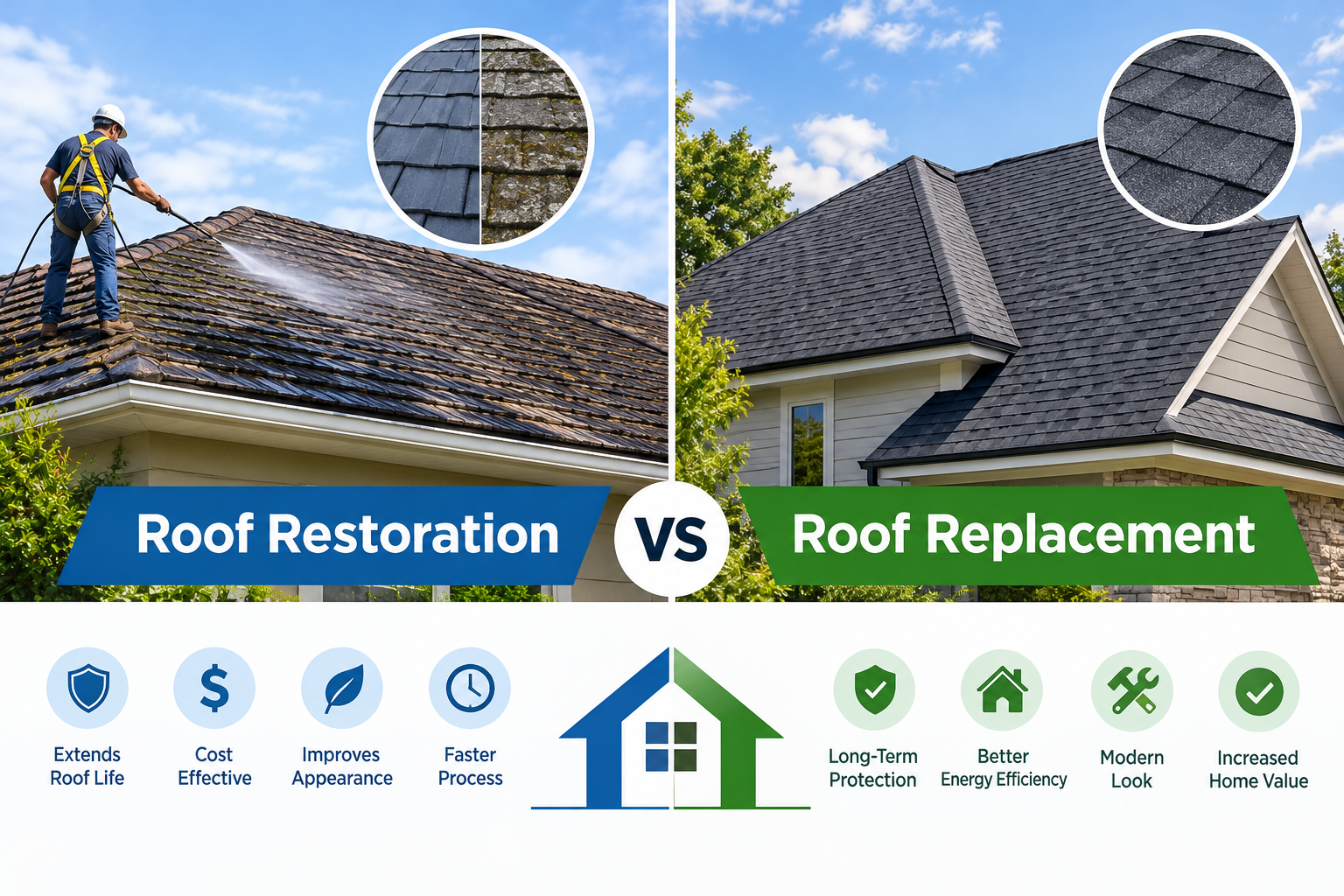
Restoration is a process of repairing and renewing a roof that is still structurally sound. The existing tiles or metal sheets stay in place, and we bring them back to a protected, good condition. The work usually includes:
Pressure cleaning to remove moss, lichen, dirt and loose surface material
Replacing cracked or broken tiles and securing loose ones
Rebedding and repointing ridge capping where the mortar has failed
Repairing rusted or damaged metal sections and resealing fasteners
Applying a sealant or protective coating, often followed by a quality roof paint
The goal is to stop deterioration, restore watertightness and improve appearance, all without removing the roof. Because the frame, battens and sheeting or tiles remain, the job is generally faster and creates far less waste than a full replacement.
What Roof Replacement Involves
Replacement means stripping the existing roof covering and installing a new one. Depending on the home, this can include new battens, sarking, flashings and a new set of tiles or metal sheets. It is a major building project, and it often takes longer, costs considerably more and requires careful planning around weather and access.
Replacement makes sense when the roof can no longer be repaired in a way that will last. That might be because the materials have failed throughout, the structure underneath has been compromised, or earlier repairs have reached their limit.
Signs You Need a New Roof
Some problems can be fixed with restoration, but others point clearly towards replacement. These are the signs you need a new roof that we treat most seriously:
Widespread sagging or dipping across the roof plane, which suggests structural damage to the timber frame or battens
Tiles that crumble or flake when handled, showing the material has broken down through age
Extensive rust on metal roofing, particularly where it has eaten through the sheet rather than sitting on the surface
Repeated leaks in several areas, even after repairs have been carried out
Daylight visible through the roof space on a bright day
Persistent damp, mould or water staining on ceilings and internal walls linked to roof failure
Storm or hail damage affecting a large percentage of the roof, not just isolated sections
One or two of these on their own does not always mean the whole roof has to go. A single leak, for example, is often a failed flashing or a cracked tile. What matters is how widespread the problem is and what is causing it. That is why we inspect before we recommend anything.
When Restoration Is the Sensible Choice
Restoration suits roofs that have aged but remain fundamentally solid. A tile roof that has faded, collected moss and developed a few cracked tiles is a typical candidate. So is a metal roof with surface oxidation and tired paint but no deep corrosion.
In general, restoration is worth considering when:
The roof structure is straight, sound and free of rot
Most tiles or metal sheets are intact
Leaks can be traced to specific, repairable points
The main issues are cosmetic wear, moss growth or failing coatings
The roof is within a realistic remaining service life once restored
For homes across the Northern Rivers, humidity, heavy rain and salt in the air all take a toll on roofing materials. Regular care often makes the difference between a roof that needs restoring and one that needs replacing. Our roof restoration services in the Northern Rivers are designed around those local conditions, which is why we focus on proper cleaning, repairs and protective sealing rather than cosmetic touch-ups.
Roof Restoration Benefits
When a roof is a good candidate, restoration offers practical advantages. The main roof restoration benefits we see for homeowners are:
A lower cost than replacement, since the existing materials are retained
Less disruption, as most restoration jobs take days rather than weeks
Improved water tightness through repaired and resealed areas
A refreshed appearance that can lift the look of the whole property
Reduced waste going to landfill, because the roof is not stripped away
Protection from further decay when a quality coating is applied
Restoration also gives you time. If a roof is reasonably healthy, restoring it can add many years of service before a full replacement is needed.
How to Extend Roof Lifespan
Whether your roof is new, restored, or simply getting older, a few habits make a real difference. If you want to extend roof lifespan, consider the following:
Clear gutters and valleys regularly so water drains freely
Trim overhanging branches that drop leaves or scratch the surface
Remove moss and lichen early, before they trap moisture
Have loose or cracked tiles fixed promptly after storms
Book a professional inspection every couple of years, and after severe weather
Keep an eye on ridge capping, flashings and roof penetrations, which are common failure points
Small repairs done early are usually inexpensive. Left alone, a cracked tile or failed flashing can allow water into the roof space and cause damage that is far more costly to fix.
When to Replace a Roof
Knowing when to replace a roof is not just about age. Concrete and terracotta tiles can last for decades, and metal roofing can also perform for a long time when it is maintained. Age is only one factor. We also consider the following:
The extent and cause of any damage
Whether the roof structure underneath is sound
The cost of ongoing repairs compared with a new roof
Whether the existing materials are still available for matching repairs
Your plans for the property, including whether you intend to stay or sell
A useful rule of thumb is that if repairs and restoration would cost a large share of a new roof and still leave underlying problems, replacement is the more responsible choice. Spending money on a roof that will fail again soon does not serve anyone.
Comparing Cost and Disruption
Restoration generally costs less than replacement, sometimes by a wide margin, because there is no need to supply and install entirely new materials. It is also quicker, and in most cases you can stay in the home throughout the work.
Replacement is a bigger investment. It involves removal of old materials, disposal, new components and more labour. The upside is a fresh roof with a full new service life and, usually, a manufacturer or installer warranty. For a roof that is genuinely at the end of its life, that outlay can be the cheaper path over time, since it avoids a cycle of repairs that do not hold.
The right comparison is not just the upfront price. It is the cost per year of reliable protection. A restoration that adds ten good years to a healthy roof is excellent value. A restoration on a failing roof that lasts two years is not.
How We Assess Your Roof
We never decide on restoration or replacement from the ground. A proper assessment involves getting up on the roof, checking the tiles or sheets, examining ridge capping and flashings, looking at the condition of the battens where accessible and inspecting the roof space for signs of water entry.
We then explain what we found in plain terms, including photos where helpful, and set out the options. If your roof can be restored, we say so. If it needs replacing, we say that too. Our free roof inspections give you a clear picture of where your roof stands before you commit to any work, so you can make a decision based on facts.
Making the Right Decision for Your Home
If your roof is ageing but solid, restoration is often the practical and cost-effective path. If it is failing across the board, replacement protects your home properly. Many roofs sit somewhere in between, which is exactly why an honest, hands-on assessment matters.
If you are weighing up your options, the team at Quality Roof Reseals is happy to take a look and talk you through what we find, with no pressure to proceed.
Frequently Asked Questions
1. How long does a restored roof last?
The answer depends on the roof material, its condition before work begins and the quality of the repairs and coating. A well-restored roof in sound condition can often provide many more years of reliable service, particularly when it is inspected and maintained regularly.
2. Can I restore my roof if it already leaks?
In many cases, yes. Leaks are often caused by cracked tiles, failed ridge capping, damaged flashings or worn sealant, all of which can be repaired during restoration. If the leaks come from widespread material failure or structural damage, replacement may be the better option.
3. How do I know if my roof needs replacing rather than restoring?
Look for sagging, crumbling tiles, deep rust, multiple recurring leaks and visible daylight in the roof space. A professional inspection is the most reliable way to confirm, because some of these problems are only visible up close or from inside the roof cavity.
4. Is roof restoration cheaper than replacement?
Generally, yes. Restoration keeps your existing roof materials, so the cost is usually well below that of a new roof. However, it only represents good value when the roof is sound enough to benefit from it.
5. How often should I have my roof inspected?
We suggest an inspection every two years, and after any severe storm or hail event. Regular checks help identify small problems early, which can extend roof lifespan and reduce the chance of expensive repairs later.