

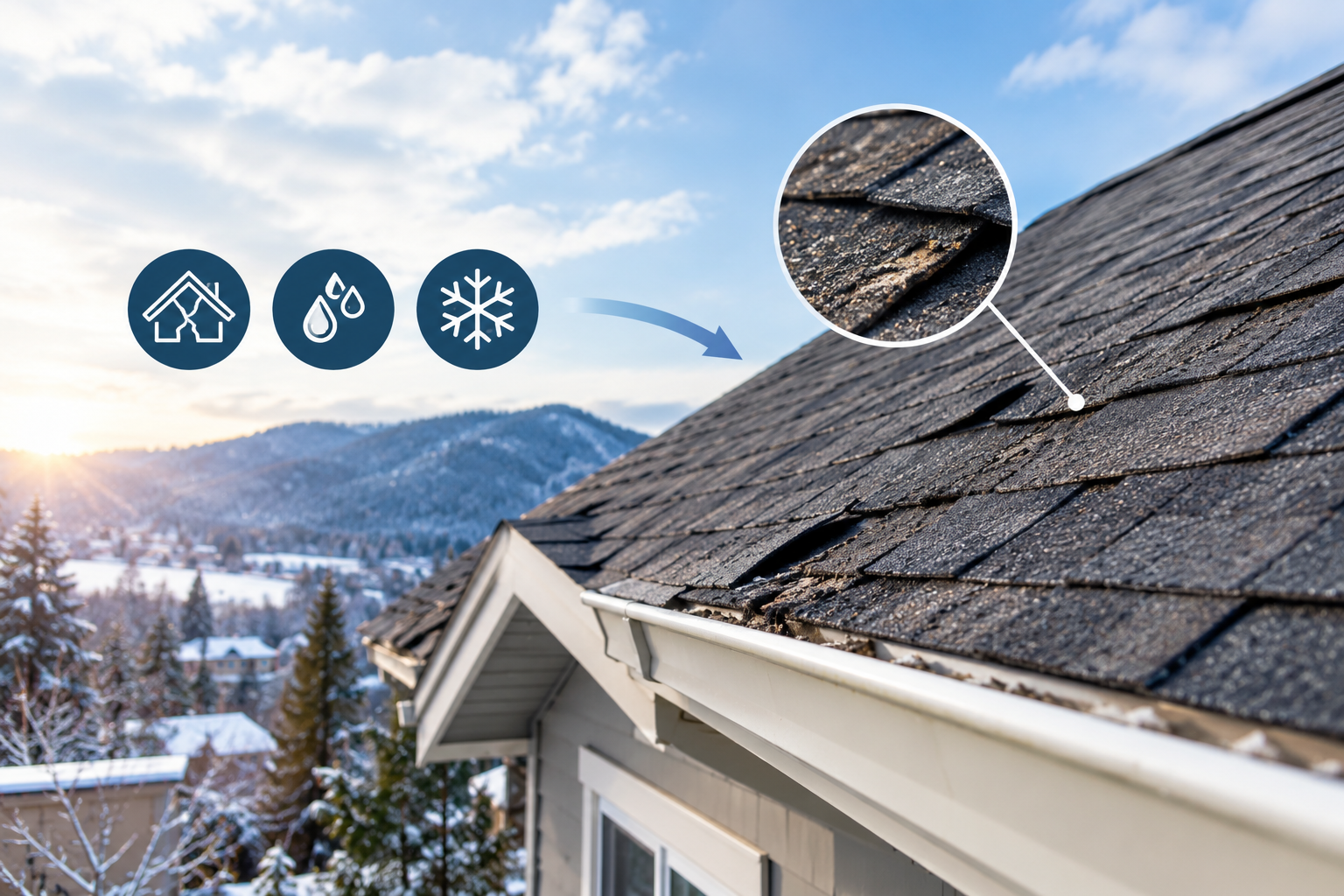
Signs Your Roof Needs Restoration Before Winter Hits Northern NSW
Every year, our team gets calls from homeowners who noticed a stain on the ceiling only after the first cold, wet front rolled through. By then, the damage has usually been building for months. Knowing the signs your roof needs restoration allows you to act while the weather is still mild and the repairs are simpler. This guide covers what we look for on roofs across the Northern Rivers and wider Northern NSW, and what you can check from the ground before winter arrives.
Why Timing Matters in Northern NSW
Our region deals with strong summer sun, high humidity, salt air near the coast and sudden storms. Winter is often drier than summer, but cold fronts and East Coast Lows can still bring heavy rain and gusty winds. A roof that has already been stressed by months of heat and moisture has less capacity to cope.
Small defects behave differently over time. A hairline crack in a tile or a lifted flashing might only let in a few drops today. Left alone, the same gap can allow water into the battens, insulation and ceiling lining. Dealing with these issues in autumn costs less and disrupts your household far less than emergency work in the middle of a downpour.
Roof Damage Warning Signs to Look For
Most of the issues we find begin as minor visual changes. These are the roof damage warning signs we see most often:
Cracked, chipped or slipped tiles
Rust spots, flaking paint or lifting seams on metal roofing
Sagging or uneven sections along the ridge or valleys
Moss, lichen or algae growth across the surface
Gutters filled with grit, which can be granules shed from worn tile coatings
Daylight visible through the roof space on a bright day
Stains, bubbling paint or a damp smell on ceilings and walls
Rising energy bills because insulation is damp or the roof is no longer reflecting heat
Any one of these can have a simple explanation. When several appear together, it usually points to a roof that is reaching the end of its protective coating rather than a single isolated fault.
Cracked and Displaced Tiles
Concrete and terracotta tiles are durable, but they are not immune to movement. Branches, hail, foot traffic and thermal expansion can crack them or shift them out of position. From the ground, look for tiles that sit at a different angle or show dark lines across the surface. A single cracked tile often leads to damp underlay, so we treat it as an early warning rather than a cosmetic issue.
Rust and Paint Failure on Metal Roofs
Colorbond and older galvanised sheets protect themselves with a coating. Once that coating thins, rust can appear around fasteners, edges and overlaps. Coastal homes between Byron Bay and Ballina are particularly exposed because salt accelerates corrosion. If you see orange or brown patches, or paint that peels away in sheets, the metal underneath is losing its protection.
Moss, Lichen and Algae
Green or black growth is common on shaded southern slopes in our humid climate. These organisms hold moisture against the roof surface, which can erode tile coatings and clog gutters. Our roof cleaning work removes this buildup, but the more important question is what the surface looks like once it has been cleaned. If the tiles are porous or the paint has worn through, cleaning alone will not provide lasting protection.
Leaks, Stains and Damp Patches
Water stains on a ceiling are the sign most homeowners notice first, yet they are often the last stage of the problem. Water can travel along rafters and across insulation before it appears inside. The stain you see may sit several metres away from the actual entry point.
If you suspect water is already getting in, have the source traced properly before any coating work begins. Our leak detection and repair process locates the entry point so the right fix is made, rather than painting over a problem that will return.
A Simple Roof Maintenance Checklist
You do not need to climb onto the roof to carry out a basic check. Please keep your feet on the ground and use this roof maintenance checklist as a starting point:
Walk around the property and look at the roof from each side, ideally with binoculars or a phone camera zoomed in.
Check for missing, cracked or crooked tiles and lifted metal sheets.
Inspect the ridge capping for gaps or crumbling mortar.
Look at valleys and flashings around chimneys, skylights and vents for rust or separation.
Clear leaves and debris from gutters and downpipes, and check that water flows freely.
Examine fascia boards and eaves for rot, staining or peeling paint.
Go into the roof space on a bright day and look for light coming through or damp insulation.
Trim overhanging branches that could drop limbs or shed debris during a storm.
Photograph anything unusual so you can compare it with later checks.
Repeat this checklist at least twice a year, and again after any severe storm. Keeping dated photos helps us see how quickly a defect is progressing.
What Happens After the Checklist
A checklist can tell you that something looks wrong, but it cannot tell you how serious it is. Roof surfaces age in ways that are hard to judge from below, and fixings and underlay are not visible at all. If your checklist turns up two or three items, the next step is a proper assessment. Our free roof inspections give you a clear picture of the roof’s condition, and the findings are written up so you can decide what to do with no pressure to proceed.
Winter Roof Prep NSW Homeowners Can Plan For
Good winter roof prep NSW households can manage usually follows a sensible order:
Inspect the roof in autumn, while the weather is dry and access is safe.
Repair cracked tiles, loose fasteners, failed sealant and damaged flashings first.
Clean the surface so any new coating bonds properly.
Restore the roof coating or sealant where it has worn thin.
Clear gutters and downpipes after the work is finished.
Doing the work in this order matters. A coating applied over dirt, moss or loose material will not last, and repairs made after painting can disturb the finished surface. We schedule jobs so that repairs, cleaning and coating happen in the correct sequence, and so the weather gives each stage time to cure.
Repair or Restoration: How to Tell the Difference
Not every roof needs a full restoration. Some only need targeted repairs. As a general guide, repairs suit roofs where the damage is limited to a few tiles, one flashing or a single section of sheeting. Restoration is worth considering when:
The coating has faded, chalked or worn away across large areas
Rust or cracking appears in many places rather than one
Repairs have been needed repeatedly over the past few years
The roof is structurally sound, but the surface protection has failed
Restoration extends the life of a roof that still has good bones. It involves repairing defects, cleaning, re-bedding or re-pointing ridge capping where required, and applying a protective coating. If the roof structure itself is compromised, such as rotted battens or heavily corroded sheets, replacement may be the more honest recommendation, and we will say so.
Tile and Metal Painting as Part of Restoration
A fresh coat of paint does more than change the colour. On tiles, it seals the porous surface and reduces water absorption. On metal, it replaces the protective layer that weather has worn away and helps reflect heat. The right product depends on the roof material, its age and how it has weathered, which is why preparation matters more than the paint itself. Our roof painting in the Northern Rivers work starts with repairs and cleaning, because a coating is only as good as the surface beneath it.
Mistakes That Make Winter Problems Worse
A few common missteps can turn a small roof problem into a larger one:
Walking on a tile roof, which can crack tiles that were previously fine
Using a pressure washer at a harsh angle, which can force water under tiles or strip coatings
Painting over moss, dirt or rust without proper preparation
Ignoring a minor leak because it only appears during heavy rain
Waiting until the first big storm to book an inspection
Questions We Hear Often
Homeowners sometimes wonder whether a roof that looks fine from the street could still be in trouble. It can. Surface wear tends to be subtle, and flashings, sealant and underlay deteriorate out of sight. This is why we encourage a professional look at roofs that are more than ten to fifteen years old, even when nothing seems wrong.
Talk to Us Before the Cold Arrives
Acting early gives you more options, better weather for the work and a lower chance of water damage inside the home. If you have noticed any of the signs above, Quality Roof Reseals is happy to look over your roof and explain what we find in plain language. We work across Northern NSW and understand how local conditions affect different roofing materials.
Frequently Asked Questions
1. How do I know if my roof needs restoration rather than a simple repair?
If the damage is limited to a few tiles, a flashing or one small area, repairs are usually enough. If the coating has faded across most of the roof, rust or cracking appears in many places, or you have needed several repairs in a short time, restoration is worth considering.
2. When is the best time to prepare my roof for winter in Northern NSW?
Autumn is the ideal window. Conditions are generally drier and milder, which suits cleaning, repairs and coating application. Booking before the first cold fronts gives the work time to cure properly.
3. Can I check my roof myself before calling a professional?
You can complete a ground-level check using the roof maintenance checklist above, including looking at tiles, gutters and ceilings. We recommend staying off the roof itself, as it can be dangerous and may damage tiles or coatings.
4. How long does a roof restoration usually take?
The time depends on the roof size, material and the repairs required. Many residential roofs take several days, allowing for repairs, cleaning, coating and curing time. Weather can also affect the schedule.
5. Will a leaking roof be fixed during restoration?
Active leaks need to be located and repaired before any coating goes on. Restoration covers the surface and many defects, but we trace and fix the cause of the leak first so the problem does not return beneath the new finish.